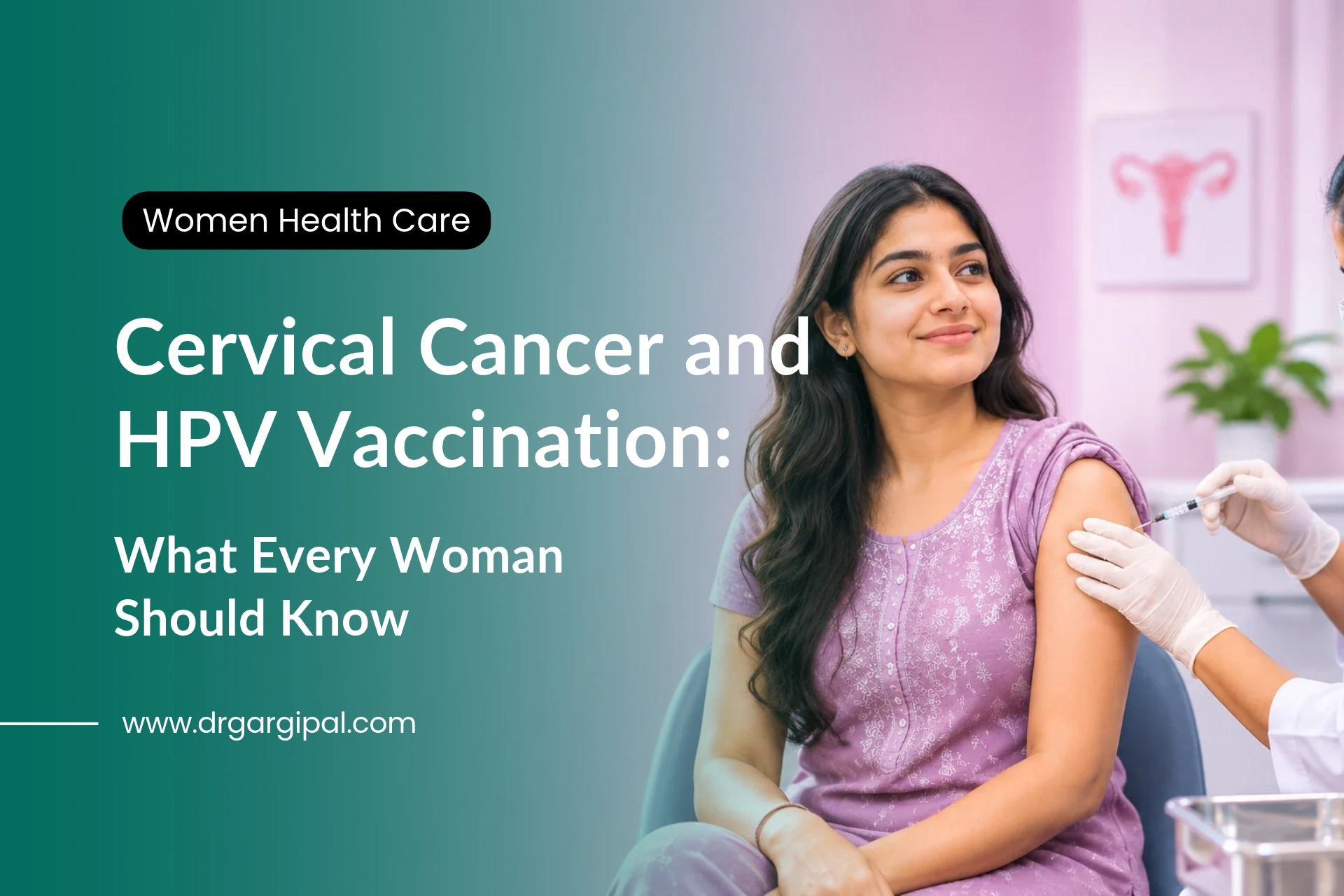
Cervical cancer is one of the cancers that can often be prevented.
Yet many women do not know about the HPV vaccine, when it should be taken, or why regular cervical cancer screening matters.
Some women assume that if they have no symptoms, everything must be fine. Others postpone gynaecologist visits because of work, family responsibilities, or simply because they feel embarrassed discussing reproductive health.
But cervical cancer prevention does not have to be complicated.
Understanding HPV, getting vaccinated at the right age, and following the recommended screening schedule can make a real difference.
In this article, Dr. Gargi Pal explains what causes cervical cancer, how the HPV vaccine helps prevent it, who should consider vaccination, and when to consult a gynaecologist nearby.
What Is Cervical Cancer?
Cervical cancer develops in the cervix, the lower part of the uterus that connects to the vagina.
It usually develops gradually. Changes can occur in the cells of the cervix over several years before cancer develops.
These changes may not cause any noticeable symptoms in the early stages.
This is why prevention and regular screening are so important.
Cervical screening can identify precancerous changes before they progress to cancer, allowing them to be treated early.
What Is HPV, and How Is It Linked to Cervical Cancer?
HPV stands for Human Papillomavirus. It is a common group of viruses that can affect the skin and certain areas of the body, including the genital region.
HPV is usually transmitted through intimate skin-to-skin contact, including sexual contact.
Many HPV infections clear naturally because the body’s immune system controls the virus.
However, certain high-risk types of HPV can persist in the body. Over time, a persistent infection may cause abnormal changes in cervical cells that can eventually develop into cervical cancer.
Two high-risk types..
- HPV 16
- HPV 18
are responsible for a large proportion of cervical cancer cases worldwide.
It is important to understand that having HPV does not mean someone has cancer. It also does not automatically mean cancer will develop. The concern is a persistent infection with a high-risk HPV type.
What Is the HPV Vaccine?
The HPV vaccine helps protect against the HPV types responsible for many cases of cervical cancer.
Depending on the vaccine, it can also protect against other HPV-related diseases, including genital warts.
The vaccine works best when given before a person is exposed to HPV. (It is recommended for girls aged 9 to 14 years.)
The HPV vaccine is preventive. It does not treat an existing HPV infection, remove abnormal cervical cells, or cure cervical cancer.
Vaccination is an important step towards reducing the risk of cervical cancer, but it works best as part of a broader prevention plan that also includes appropriate screening.
Who Should Take the HPV Vaccine?
The HPV vaccine is particularly important for girls aged 9 to 14 years, before they become sexually active.
In India, the government launched a nationwide HPV vaccination programme on 28 February 2026 for eligible 14-year-old girls.
Under this programme, a single dose of the Gardasil-4 vaccine is provided free of cost at designated government health facilities. Vaccination is voluntary and requires parental consent.
If your daughter is eligible, contact your nearest government health facility to confirm availability and the vaccination process.
What if you are older than 14?
You may still benefit from HPV vaccination. The potential benefit depends on your age, previous vaccination history, likely prior exposure to HPV, and the vaccine being considered.
Women and older adolescents who have not been vaccinated should speak with a gynaecologist in their city about whether vaccination is appropriate for them.
The recommended number of doses can vary depending on age, immune status, vaccine type, and the applicable vaccination schedule. Do not assume that everyone needs the same number of doses.
Is the HPV Vaccine Safe?
It is natural for parents to have questions before vaccinating their children. You may have heard concerns from relatives, friends, or social media.
The HPV vaccine has been studied extensively and is used in vaccination programmes worldwide. It has a well-established safety record.
Common side effects are generally mild and temporary. These may include:
- Pain, redness, or swelling at the injection site
- Mild fever
- Headache
- Feeling tired
- Dizziness or fainting around the time of vaccination
Serious allergic reactions are rare.
Vaccination should be administered by trained healthcare personnel who can respond appropriately if an adverse reaction occurs.
If your child has a history of a severe allergic reaction to a previous dose or a vaccine component, inform the healthcare provider before vaccination.
The best way to address concerns is to discuss them with a qualified doctor rather than relying on unverified social media claims.
Can Married Women or Women Who Are Sexually Active Take the HPV Vaccine?
Yes, vaccination may still be beneficial for some women who are already sexually active or married.
However, the vaccine does not treat HPV infections that are already present. Its benefit may also be lower if a person has already been exposed to some of the HPV types covered by the vaccine.
This is why vaccination is recommended at a younger age, before exposure is likely.
If you missed vaccination during adolescence, do not assume that it is automatically too late.
Discuss your age, medical history, and vaccination options with your gynaecologist.
Does the HPV Vaccine Mean You Do Not Need Cervical Cancer Screening?
No. This is one of the most important things to remember.
The HPV vaccine protects against selected HPV types, but it does not cover every HPV type that can cause cervical cancer.
Even after vaccination, women should follow the recommended cervical cancer screening schedule.
Depending on your age, medical history, immune status, and local clinical guidelines, your doctor may recommend an HPV test, a Pap test, or another appropriate screening method.
Screening is important because precancerous cervical changes often develop without obvious symptoms.
Do not wait until you experience pain or unusual bleeding before asking your doctor whether screening is due.
What Are the Warning Signs of Cervical Cancer?
Early cervical cancer and precancerous changes may not cause noticeable symptoms. This is why routine screening is essential.
However, certain symptoms should not be ignored:
- Bleeding between periods
- Bleeding after sexual intercourse
- Bleeding after menopause
- Unusual vaginal discharge, particularly if it is persistent or foul-smelling
- Persistent pain in the pelvic region or lower back
These symptoms can occur for several reasons and do not necessarily mean that you have cervical cancer. However, they deserve medical evaluation, particularly if they are new, persistent, or unusual for you.
If you experience these symptoms, arrange a consultation with a gynaecologist rather than waiting for them to disappear on their own.
Can Cervical Cancer Be Prevented?
In many cases, the risk of cervical cancer can be significantly reduced through a combination of preventive measures.
Here are the important steps to remember:
1. Get vaccinated at the recommended age
HPV vaccination helps prevent infection with important cancer-causing HPV types. Early vaccination provides the greatest benefit.
2. Do not skip cervical cancer screening
Screening can identify precancerous changes before they become cancer. Follow the schedule recommended by your doctor.
3. Do not ignore unusual symptoms
Bleeding after intercourse, persistent unusual discharge, or unexplained pelvic pain should be evaluated.
4. Avoid smoking
Smoking is associated with a higher risk of persistent HPV infection and cervical cancer. Avoiding tobacco is an important preventive measure.
5. Seek reliable medical advice
Do not rely on home remedies or online claims to prevent or treat HPV. Vaccination and screening decisions should be based on established medical guidance.
You can read more about cervical cancer prevention and screening in the World Health Organization’s cervical cancer fact sheet.
Frequently Asked Questions About HPV and Cervical Cancer
1. At what age should the HPV vaccine be taken?
HPV vaccination is prioritised for girls aged 9 to 14 years, before exposure to the virus. Older adolescents and adults may also benefit, depending on their circumstances. Ask your gynecologist in Mumbai which schedule is appropriate for you.
2. Is the HPV vaccine available free of cost in India?
Yes. India’s nationwide HPV vaccination programme, launched in February 2026, provides the Gardasil-4 vaccine free of cost to eligible 14-year-old girls at designated government health facilities. Check with your local government facility for current availability and eligibility.
3. Can the HPV vaccine prevent all cervical cancer cases?
No. The vaccine protects against important cancer-causing HPV types but does not prevent every case. Regular cervical cancer screening remains necessary.
4. Can HPV infection go away on its own?
Yes. Many HPV infections are controlled or cleared naturally by the immune system.
However, persistent infection with high-risk HPV types can cause abnormal cervical cell changes. Appropriate screening helps detect these changes.
5. Do I need a cervical cancer screening test if I feel healthy?
Yes, when you are due for screening under the applicable guidelines. Precancerous cervical changes often cause no symptoms, so feeling healthy does not rule them out.
6. Should I consult a gynaecologist if I notice bleeding after intercourse?
Yes. Bleeding after intercourse can have several causes, including cervical inflammation, infection, or other cervical changes. It should be evaluated rather than ignored.
Take the First Step Towards Cervical Cancer Prevention
Cervical cancer prevention begins with awareness and timely action. HPV vaccination, regular screening, and early evaluation of unusual symptoms can help protect your long-term health.
If you have questions about HPV vaccination, cervical cancer screening, or your reproductive health, consult a qualified gynaecologist for advice based on your age and medical history.
Dr. Gargi Pal is a Consultant Obstetrician and Gynaecologist with clinics in Borivali West and Kandivali East, Mumbai. She provides guidance on women’s health, preventive care, and gynaecological concerns.
If you are looking for a gynecologist in Mumbai then you can contact Dr. Gargi Pal to book a consultation and discuss the next steps for your health.
Your health deserves attention even when nothing feels wrong.