There is a version of pregnancy that people talk about a lot.
The first heartbeat.
The growing bump.
The kicks.
The excitement of meeting your baby.
And then there is the part nobody really prepares you for.
The back pain.
The ache after standing in the kitchen.
The struggle to turn in bed.
The discomfort after sitting at your desk for too long.
And that moment when getting up from the sofa suddenly requires a whole strategy.
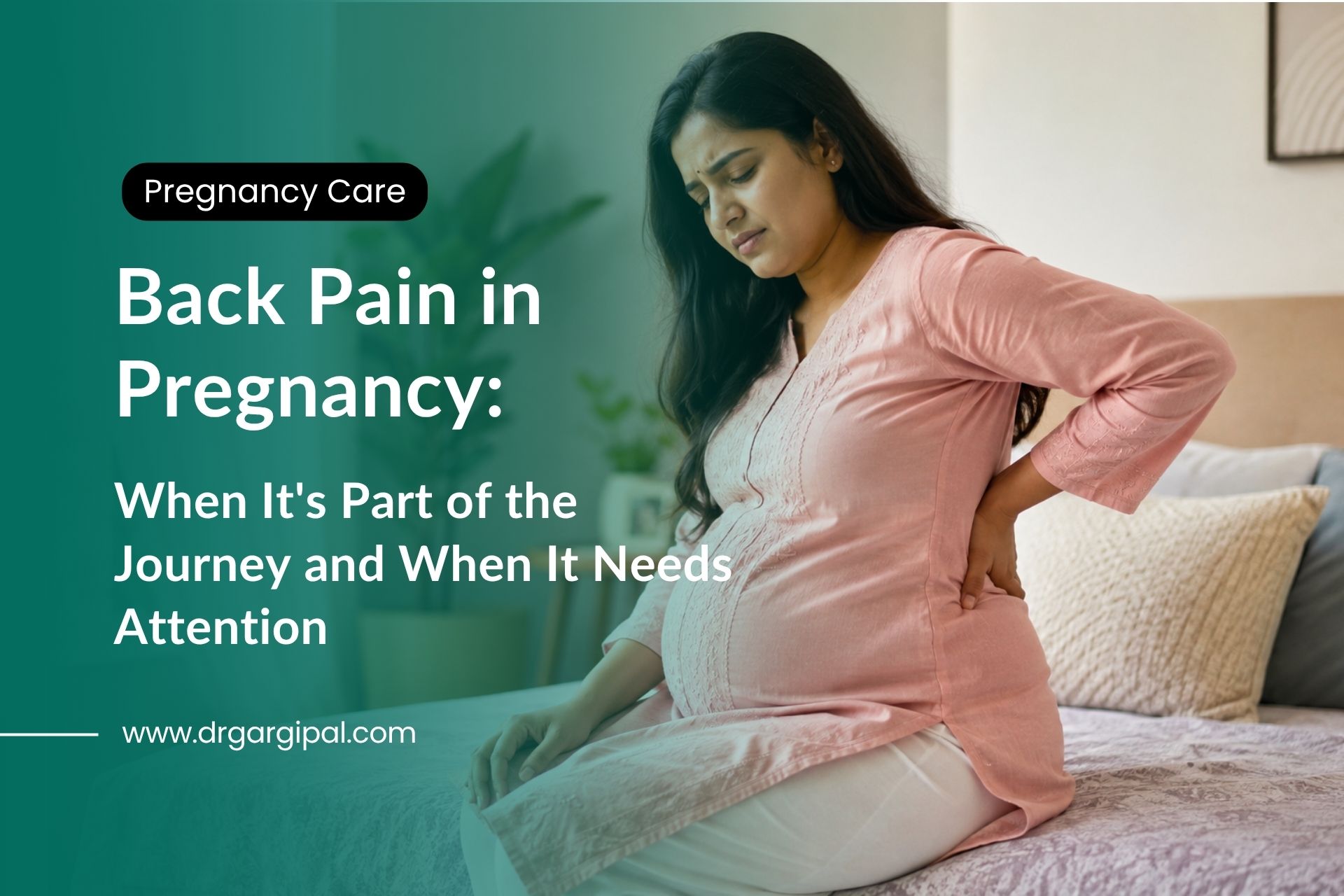
Back pain is extremely common during pregnancy. As your body changes, your spine, pelvis, muscles and joints all have to adapt to support a growing baby.
For most women, this is uncomfortable but manageable.
But there is an important distinction.
Common does not mean every type of back pain should be ignored.
Understanding what is expected, what you can do about it, and which symptoms deserve a consultation with a nearby gynecologist in your area can make pregnancy a lot more comfortable and safer.
Why does pregnancy affect your back?
Pregnancy changes your body long before your bump becomes obvious.
As the uterus grows, your centre of gravity gradually shifts forward. Your posture changes to compensate, placing additional strain on the muscles and joints of your lower back.
At the same time, hormonal changes, particularly the effects of relaxin, increase flexibility and looseness around the ligaments of the pelvis. This is part of your body’s preparation for childbirth, but it can also make the pelvis and surrounding joints feel less stable.
And then there is the very practical reality.
You are carrying more weight, sleeping differently, moving differently and using muscles in ways your body is not accustomed to.
Your abdominal muscles also stretch as the pregnancy progresses, which can alter the way your core supports your spine.
So yes, your back has a lot going on.
What does normal pregnancy-related back pain feel like?
Pregnancy-related back pain can look different from woman to woman.
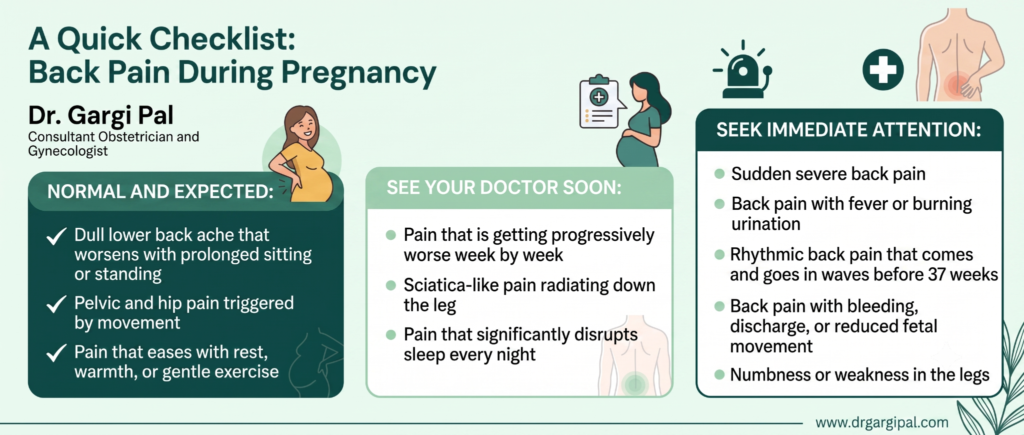
Lower back or lumbar pain
This is usually felt around the lower back or waistline.
It may become worse after:
- Standing for a long time
- Sitting in one position
- Walking or physical activity
- A long day at work
- Getting up after prolonged sitting
It often feels like a persistent muscular ache rather than a sudden, severe pain.
Pelvic or posterior pelvic pain
This tends to be felt lower down, around the back of the pelvis, buttocks or sometimes the upper thighs.
You may notice it particularly when:
- Turning over in bed
- Getting out of a car
- Climbing stairs
- Getting up from a chair
- Walking for a long time
- Standing on one leg while dressing
Some women describe it as an ache. Others experience a sharp or catching pain with certain movements.
These patterns are common in pregnancy and can often be managed conservatively.
But your pain should still be assessed if it is severe, persistent or interfering significantly with your daily life.
You do not have to simply put up with it because you are pregnant. Consult a gynecologist if you have any doubts or confusions.
What can actually help?
Fortunately, there is quite a lot you can do.
Keep moving, but move smartly
Unless your obstetrician has advised otherwise, gentle regular activity is usually better than prolonged bed rest.
Walking, pregnancy-safe strengthening exercises and appropriately modified prenatal yoga can help maintain muscle strength and mobility.
The goal is not to exercise through pain. The goal is to keep your body moving comfortably.
Pay attention to posture
If you work at a desk, avoid sitting continuously for hours. Keep your back supported, feet comfortably placed on the floor and take regular movement breaks.
If you spend a lot of time standing, try to distribute your weight evenly rather than constantly leaning to one side.
Small changes repeated throughout the day can make a surprisingly large difference.
Make sleep more comfortable
As pregnancy progresses, side sleeping is generally recommended. Try placing a pillow between your knees and, if needed, another pillow under your abdomen for additional support.
A pregnancy pillow is not essential, but if it helps you sleep better, it is certainly worth considering.
Choose supportive footwear
Pregnancy is probably not the best time to spend an entire day in uncomfortable heels.
Comfortable footwear with good support can reduce strain on your feet, legs and lower back, particularly if you are on your feet for long periods.
Use warmth carefully
A warm compress can help relax tight muscles and ease discomfort. Keep the temperature comfortably warm rather than very hot, use it for short periods, and avoid applying heat directly over the abdomen.
Consider physiotherapy
If your back or pelvic pain is persistent, do not wait until the third trimester to ask for help. A physiotherapist experienced in pregnancy can assess your posture and movement and teach you exercises specifically suited to your pregnancy.
Sometimes the right exercise is far more useful than simply resting.
When is back pain NOT something to ignore?
This is the part every pregnant woman should know.
Most back pain is musculoskeletal. But back pain can occasionally be the first sign of another problem.
Back pain with fever or chills
Back pain accompanied by fever, chills or burning while passing urine can indicate a urinary or kidney infection. During pregnancy, this needs prompt medical attention.
Regular, rhythmic back pain
If your back pain comes and goes at regular intervals, almost like waves, particularly if it is becoming stronger or more frequent, it may represent uterine contractions rather than ordinary muscular pain. If this occurs before 37 weeks, contact your pregnancy specialist in Mumbai promptly.
Back pain with vaginal bleeding or fluid leakage
Back pain associated with vaginal bleeding, watery fluid leakage or unusual vaginal discharge requires assessment. Depending on the stage of pregnancy and associated symptoms, it may be related to problems that need urgent attention, including preterm labour or placental complications.
Sudden or severe pain
A sudden, intense pain that feels very different from your usual pregnancy discomfort should not simply be attributed to the pregnancy. Get assessed.
Pain travelling down your leg
A shooting or burning pain travelling from the lower back through the buttock and down the leg can occur due to nerve irritation, including sciatica. It is common during pregnancy, but persistent or severe symptoms should be evaluated so that appropriate treatment can be advised.
Numbness or weakness
Back pain associated with significant numbness, loss of sensation or weakness in the legs requires medical assessment. If you have difficulty walking or controlling your bladder or bowel along with severe back symptoms, seek urgent medical care.
Back pain and high-risk pregnancies
If you have a high-risk pregnancy, do not assume that a new symptom is simply part of pregnancy.
Women with a history of preterm birth, multiple pregnancy, certain placental problems, cervical concerns or other pregnancy complications may need a lower threshold for assessment when new or unusual symptoms develop.
The right response is not to panic. It is simply to check rather than guess.
Dr. Gargi Pal specialises in high-risk pregnancy care in Mumbai and works closely with her patients to monitor symptoms that might seem minor but carry more significance in a complex pregnancy.
A simple rule to remember
Pregnancy comes with its share of aches and discomforts.
But being pregnant does not mean you have to accept significant pain as something you simply have to tolerate for nine months.
Sometimes a few changes in posture, activity and support are enough. Sometimes physiotherapy can make a tremendous difference. And sometimes back pain is your body’s way of telling you that it needs medical attention.
Knowing the difference is what matters.
When it comes to pregnancy back pain, ask yourself three questions.
- Is this pain similar to what I have been experiencing?
- Is it improving with rest, movement or simple measures?
- Are there any other symptoms such as fever, urinary symptoms, bleeding, fluid leakage, abdominal tightening or neurological symptoms?
If the pain is new, severe, persistent, worsening or accompanied by other symptoms, speak to your obstetrician in Mumbai.
Looking for an obstetrician in Kandivali or Borivali?
Dr. Gargi Pal is a Consultant Obstetrician and Gynaecologist in Mumbai, providing care throughout pregnancy, from early pregnancy and routine antenatal care to high-risk pregnancies, delivery and postpartum recovery.
With clinics in Kandivali East and Borivali West, her approach is centred around helping women understand what is happening to their bodies, what they can safely manage at home, and when a symptom needs closer evaluation.
Because pregnancy is not just about reaching your due date. It is about getting there feeling informed, supported and cared for.